| Largest Cities |
| City |
Population |
Estimated |
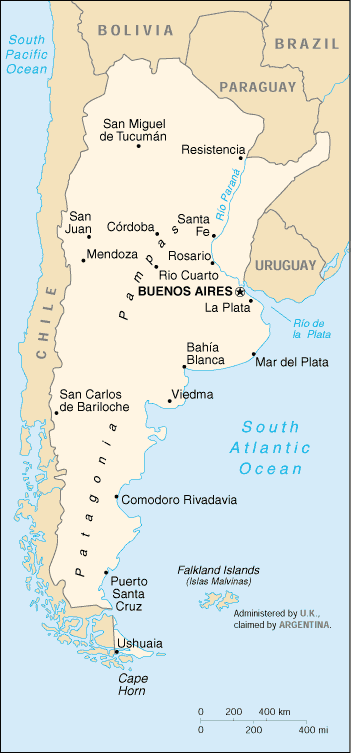
| Buenos Aires |
12,955,300 |
2002 |
| Cordoba |
1,460,500 |
2002 |
| Rosario |
1,261,400 |
2002 |
Key Data |
| Region: |
South America |
| Population: |
36,508,600 September 2002 |
| Area Total: |
2,766,890 km2 |
| Area Land: |
2,736,690 km2 |
| Coast Line: |
4,989 km km |
| Capital: |
Buenos Aires |
| Climate: |
Mostly temperate; arid in southeast; subantarctic
in southwest. |
| Languages: |
Spanish (official)
English
Italian
German
French
Arabic
Japanese
indigenous languages such as Guarani, Quechuan and Mataco |
| Currency: |
1 Argentine peso (ARP$) = 100 centavos |
| Holiday: |
Revolution Day, 25 May (1810) |
Average Daily Temperature |
| Capital: |
Buenos Aires |
| January: |
23.3°C / 74°F |
| July: |
10°C / 50°F |
| Annual Rainfall: |
954.3mm / 37.6'' |
Boundaries |
|
Chile: |
5,150km |
|
Paraguay: |
1,880km |
|
Brazil: |
1,224km |
|
Bolivia: |
832km |
|
Uruguay: |
579km |
Ethnic Divisions |
| European (including Spanish,
Italian, German, Ukrainian, Lithuanian and Slovenian) |
90% |
| Indigenous and Mestizo |
5% |
| Other ethnic groups (including
Japanese and Arabs) |
5% |
Religions |
| Roman Catholic |
92% |
| Jewish |
2% |
| Ukrainian Catholic |
2% |
| Protestant |
2% |
| Other |
1% |
| Eastern Orthodox |
1% |
|

|